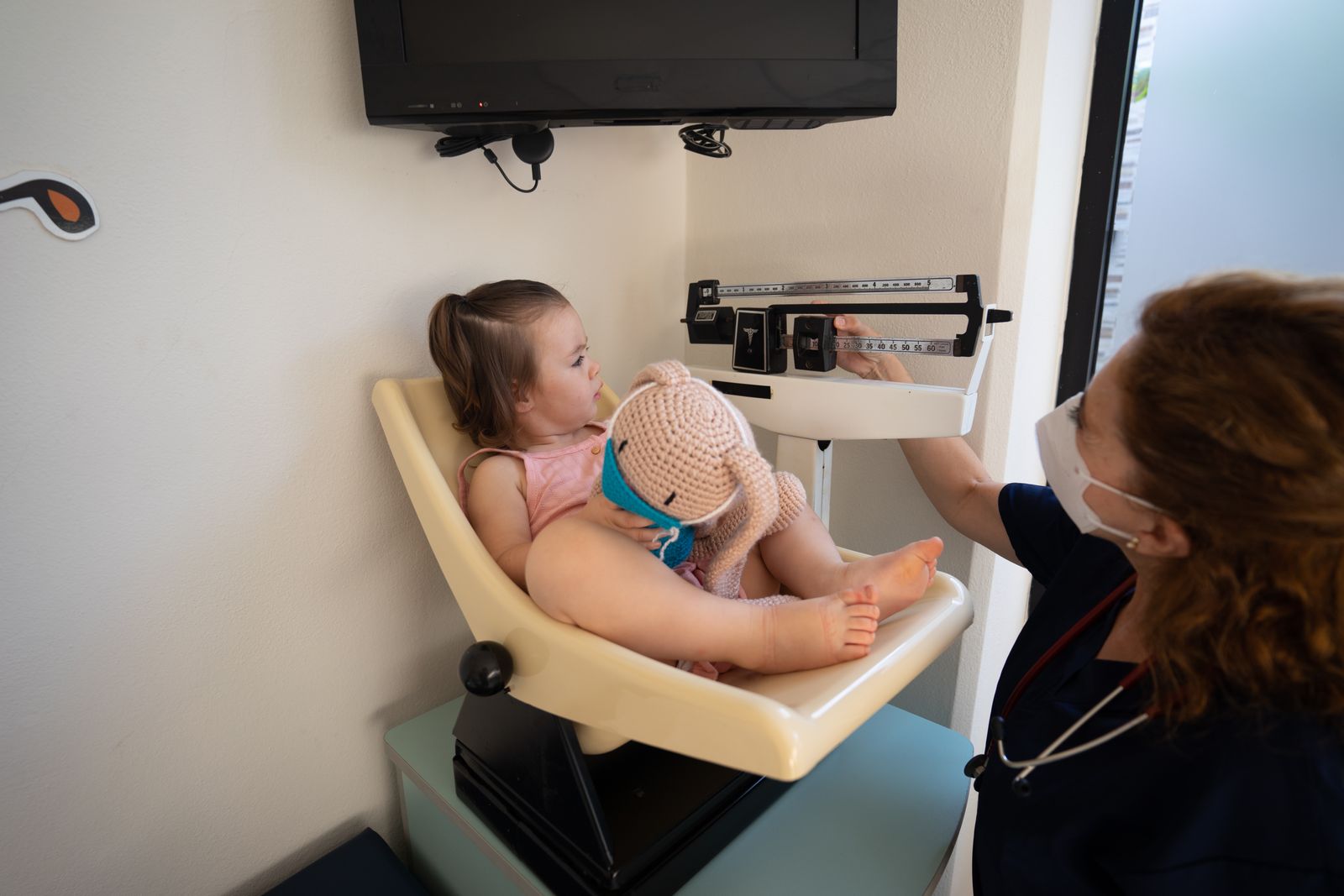
From the first weeks of your baby’s life until they start school, the child health centre, BVC, follows your child’s growth and development. It is free, friendly and a cornerstone of family life in Sweden. Here is what to expect, especially in the toddler years.
BVC stands for barnavårdscentral, the children’s health centre. According to 1177, the official Swedish healthcare guide, BVC serves all children up to the age of six and the visits are free of charge. You will usually be assigned a regular nurse (BVC-sköterska) who gets to know your family over the years.
The rhythm of visits
Visits are frequent in the first year and then space out as your child grows. 1177 describes a programme that begins with a home visit by the nurse in the first week or two, then regular check-ins through infancy. By the toddler years the pace eases, and you typically see the nurse at key ages to track development.
| Roughly when | What usually happens |
|---|---|
| Around 12 months | Growth, motor skills and vaccinations are reviewed |
| Around 18 months | Walking, early words and play are checked, with a nurse visit |
| Around 2.5 to 3 years | Language, behaviour and general development are assessed, often with a nurse and sometimes a doctor |
| Around 4 to 5 years | A broader check before school, including vision and hearing |
The exact ages and structure can vary a little between regions, so your own BVC will give you the schedule for where you live. The principle is the same everywhere: regular, gentle checks rather than a single big examination.
What the nurse looks at
At a toddler visit the nurse will usually weigh and measure your child, plot growth on a chart, and talk with you about eating, sleep, language and play. These conversations matter as much as the measurements. They are a chance to raise anything that is worrying you, from fussy eating to a late first word, and to get advice from someone who sees hundreds of children of the same age.
Vaccinations are given at BVC as part of the national childhood vaccination programme. The nurse keeps a record and will tell you which ones are due. If you have moved to Sweden with a child who has already had some vaccinations abroad, bring any records you have so the nurse can fit your child into the Swedish schedule.
Using BVC as a new arrival
If you have just moved to Sweden, you register your child with a local health centre, and BVC care follows from there. Many nurses speak good English, and you can ask for an interpreter if you need one. For urgent questions outside a scheduled visit, you can call 1177, the national healthcare advice line, where nurses answer in Swedish and English and can direct you to the right care.
BVC is not only about checks and jabs. It is the single most useful relationship you will build in your toddler’s early years here.
Making the most of it
Treat your BVC nurse as a partner. Write down questions before a visit so you do not forget them, be honest about how things are going at home, and remember that no concern is too small. If you would like care in English between visits, our guide to finding English-speaking healthcare for your toddler explains the options. For everyday worries about feeding and routines, our pieces on feeding a toddler in Sweden and building a calm bedtime routine may help too.